
Introduction
The modern fitness industry represents a dynamic ecosystem where equipment quality directly impacts member retention, operational efficiency, and business profitability. Whether you are launching a boutique training facility, expanding an existing athletic center, or managing a corporate wellness program, understanding the equipment supply chain and selection criteria is essential for long-term success. This comprehensive guide explores the critical questions that every gym owner and facility manager must answer when investing in commercial fitness equipment. From manufacturing origins to distributor relationships, from facility planning to brand selection, we will cover everything you need to make informed decisions that benefit your business and your members.
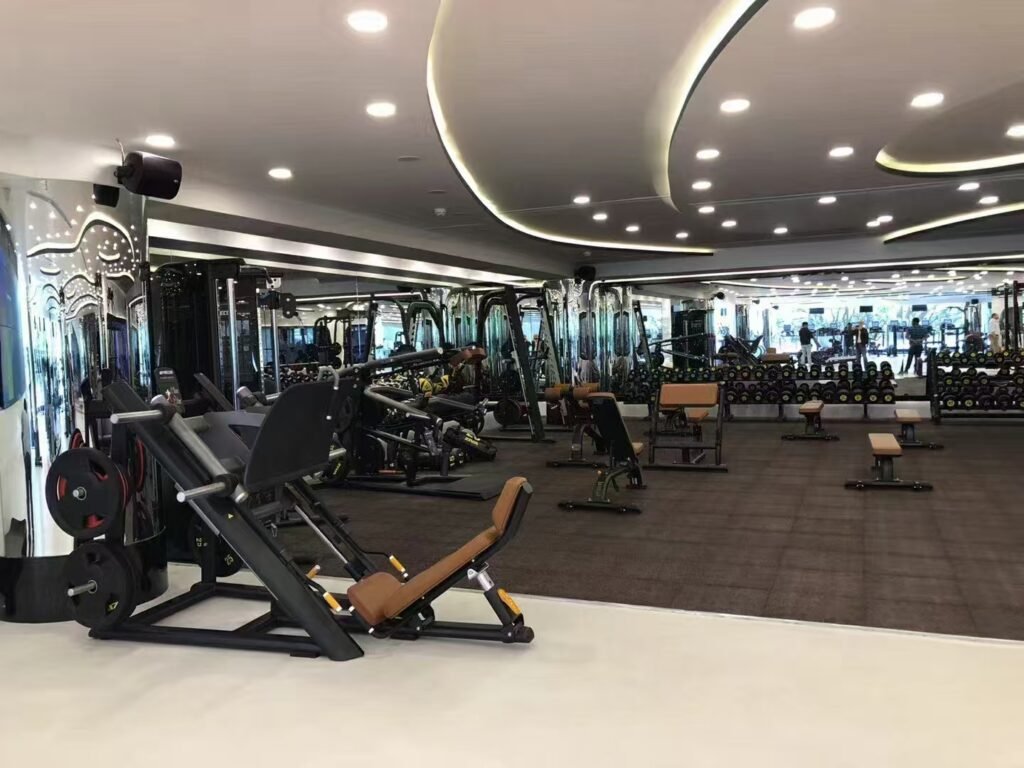
Where Do Most Gyms Get Their Equipment?
The procurement landscape for gym equipment has evolved significantly over the past two decades, offering gym owners multiple pathways to acquire the machines and tools their members need. Most gyms obtain their equipment through a combination of channels, each with distinct advantages and considerations.
Direct manufacturer relationships represent the primary source for large-scale gym chains, franchise operations, and high-volume purchasers. By dealing directly with a GYM Manufacturer, these facilities can negotiate favorable pricing, customize equipment specifications, and establish dedicated supply lines. Major fitness brands often maintain direct sales teams specifically for large commercial accounts, offering comprehensive package deals that include equipment, installation, and extended warranties. However, this approach typically requires substantial minimum orders, significant upfront capital, and the internal capacity to manage logistics, installation, and ongoing maintenance independently.
Fitness equipment distributors serve as the most common source for independent gyms, mid-sized facilities, and specialty training centers. These distributors maintain extensive inventories of multiple brands, allowing gym owners to mix and match equipment from different manufacturers to create the ideal equipment mix. Professional distributors offer invaluable services including facility design consultation, equipment layout planning, professional installation, staff training, and ongoing maintenance support. For most gym owners, the distributor relationship provides the best balance of pricing, service, and flexibility.
Used and refurbished equipment dealers have become increasingly sophisticated, offering commercial-grade fitness equipment at significantly reduced prices. Professional refurbishment processes restore equipment to like-new condition, often with updated electronics and fresh upholstery. Many successful gyms start with refurbished equipment to manage initial costs, then gradually upgrade to new machines as their business grows. Quality refurbishers provide warranties and service agreements that rival those of new equipment purchases.
Online marketplaces and auctions offer additional sourcing options, though they require careful due diligence regarding equipment condition, maintenance history, and authenticity. Some gyms successfully source equipment through business liquidation sales, manufacturer closeouts, and online equipment exchanges.
Equipment leasing and financing companies provide alternative acquisition methods that preserve working capital. Many gyms lease equipment with purchase options at the end of the lease term, allowing them to upgrade equipment regularly while managing cash flow effectively.
The most successful gyms typically maintain relationships with multiple sources, leveraging direct manufacturer relationships for core cardio equipment, distributor partnerships for strength equipment and accessories, and secondary markets for seasonal additions or experimental equipment.
What Is a Fitness Equipment Distributor?
Understanding the comprehensive role of a fitness equipment distributor is fundamental to navigating the commercial fitness industry successfully. Far more than simple resellers, professional distributors serve as strategic partners who bridge the gap between GYM Manufacturer companies and end-users.
A fitness equipment distributor functions as a specialized intermediary that purchases gym equipment in wholesale quantities from multiple manufacturers and sells to commercial facilities including gyms, Fitness Studio locations, GYM CLUB operations, hotels, hospitals, universities, and corporate wellness centers. However, their value proposition extends across a spectrum of essential services:
Strategic facility planning and design consultation – Professional distributors employ experienced facility designers who assess space dimensions, member demographics, usage patterns, and business objectives to recommend optimal equipment configurations. They understand that a 3,000-square-foot boutique studio requires fundamentally different equipment planning than a 30,000-square-foot multi-purpose athletic facility. Their expertise in traffic flow, equipment density, and zoning ensures that members can access equipment efficiently without congestion or safety concerns.
Professional installation and setup – Commercial fitness equipment typically arrives in multiple components requiring precise assembly, proper anchoring, alignment, and calibration. Distributors maintain trained installation teams who ensure equipment is assembled correctly, leveled properly, and tested thoroughly before member use. Improper installation can lead to equipment damage, member injuries, and voided warranties, making professional installation essential.
Comprehensive maintenance and repair services – Ongoing equipment maintenance represents one of the largest operational expenses for gyms. Distributors offer preventive maintenance programs, emergency repair services, parts inventory management, and technician training that minimize equipment downtime. Their service teams understand multiple equipment brands and can diagnose problems efficiently, reducing repair times and keeping equipment operational.
Parts availability and inventory management – Distributors stock extensive inventories of replacement parts for the brands they represent, ensuring that repairs occur quickly rather than waiting weeks for parts shipments. This is particularly critical for high-usage equipment where downtime directly impacts member satisfaction and revenue.
Warranty administration and claims management – When equipment issues arise under warranty, distributors handle all manufacturer communications, claims submission, and service coordination, saving gym owners significant administrative time and frustration.
Equipment financing and flexible payment solutions – Many distributors offer leasing programs, equipment financing, seasonal payment plans, and trade-in programs that make quality fitness equipment accessible to businesses with varying capital availability.
Ongoing technology and product education – The fitness equipment industry evolves rapidly with new technologies, training methodologies, and equipment innovations. Distributors keep gym owners informed about industry trends, new product releases, and upgrade opportunities that can enhance their facilities and member experience.
Trade-in and equipment rotation programs – As facilities grow and evolve, distributors facilitate equipment trade-ins, helping gyms upgrade their equipment mix while recovering value from older machines.
In essence, a professional fitness equipment distributor functions as a gym’s equipment partner throughout the entire equipment lifecycle, from initial planning and selection through installation, maintenance, and eventual replacement. This partnership approach delivers value that far exceeds the equipment itself.
What Are the Two Most Important Considerations When Selecting a Fitness Facility?
Selecting the right fitness equipment for any facility – whether a dedicated Fitness Studio, a comprehensive GYM CLUB, a hotel fitness center, or a corporate wellness space – requires balancing numerous factors. However, industry experts consistently identify two considerations as paramount: equipment durability and reliability and member experience and operational flow.
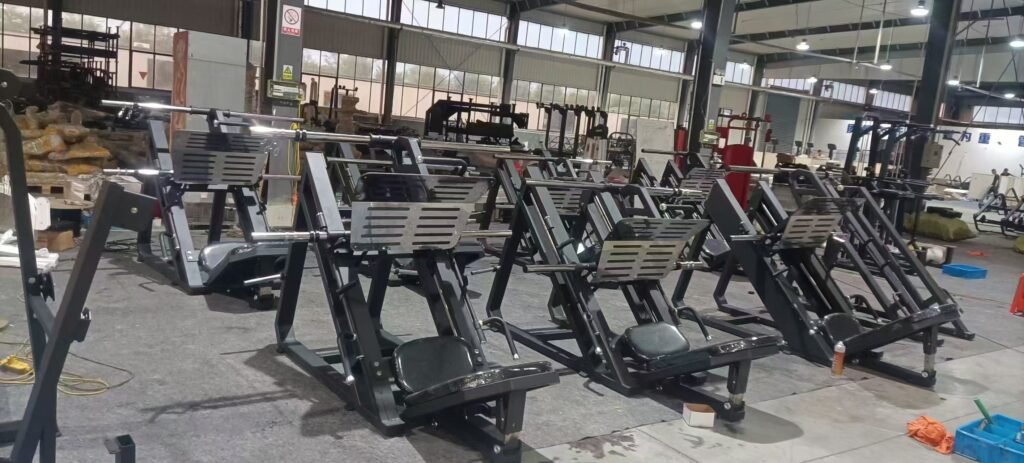
Equipment Durability and Reliability
Commercial gym equipment operates under conditions that would quickly destroy residential-grade machines. A single treadmill in a busy facility may log 5,000-8,000 hours of operation annually, while strength equipment might see hundreds of users daily. Under these extreme usage conditions, equipment durability isn’t merely a quality indicator – it’s a business necessity.
Key durability considerations include:
Frame construction and materials – Commercial-grade equipment uses thicker steel, reinforced welding, and heavier-gauge materials that resist bending, cracking, and structural failure even under heavy loads. Quality GYM Manufacturer companies use industrial-grade materials that exceed standard safety requirements.
Drive systems and mechanics – Cardio equipment requires robust motors, durable belts, and precision bearings that maintain smooth operation over thousands of hours. Strength equipment needs reliable pulley systems, durable cables, and consistent resistance mechanisms that function properly regardless of usage frequency.
Upholstery and padding – Commercial-grade upholstery uses high-density foam, durable vinyl, and reinforced stitching that resists tearing, compression, and wear from constant use and perspiration.
Electronics and software – Modern equipment incorporates sophisticated electronics that must withstand temperature variations, humidity, and continuous operation. Quality manufacturers use commercial-grade components and rigorous testing protocols.
Serviceability – Durable equipment also needs to be serviceable, with accessible components, standardized parts, and clear maintenance procedures that enable quick repairs.
Warranty coverage – Comprehensive commercial warranties reflect manufacturer confidence in their product durability. Quality equipment typically includes 5-10 year frame warranties, 3-5 year parts warranties, and 1-3 year labor warranties.
For GYM Manufacturer companies like Gettinglong, durability is non-negotiable. Their stringent quality control process ensures that every batch of fitness equipment meets rigorous standards for commercial application.
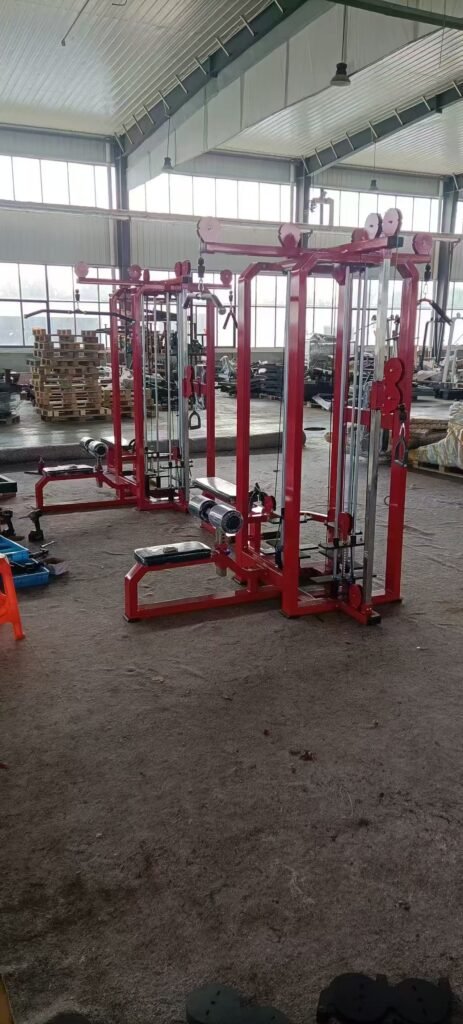
Member Experience and Operational Flow
The second critical consideration – member experience – encompasses equipment layout, facility navigation, aesthetic appeal, and the overall atmosphere that determines member satisfaction and retention. Even the highest-quality gym equipment fails to deliver business results if members feel cramped, frustrated by equipment waits, or struggle to navigate the facility efficiently.
Optimal member experience involves:
Strategic equipment zoning – Separating cardio equipment, strength training machines, free weights, functional training areas, and stretching zones to minimize congestion and create intuitive traffic patterns.
Adequate spacing and clearances – Ensuring sufficient space between equipment for safe use, comfortable movement, and proper form. Crowded equipment floors not only create safety hazards but also diminish the member experience.
Equipment density and capacity planning – Balancing equipment quantity with facility capacity to minimize wait times without underutilizing valuable floor space.
Sightlines and supervision – Maintaining clear sightlines that allow staff to monitor equipment areas, assist members, and maintain safety standards.
Accessibility and inclusivity – Accommodating members of all abilities, body types, and fitness levels with appropriate equipment selection and placement.
Aesthetic consistency and brand alignment – Creating a cohesive environment that reinforces the facility’s brand identity and appeals to target demographics.
Successful facility selection integrates these two considerations holistically. A boutique Fitness Studio might prioritize specialized equipment and intimate atmosphere over equipment variety, while a large GYM CLUB focuses on equipment variety, efficient member flow, and high capacity. Both approaches require thoughtful selection of fitness equipment that aligns with facility objectives and member expectations.
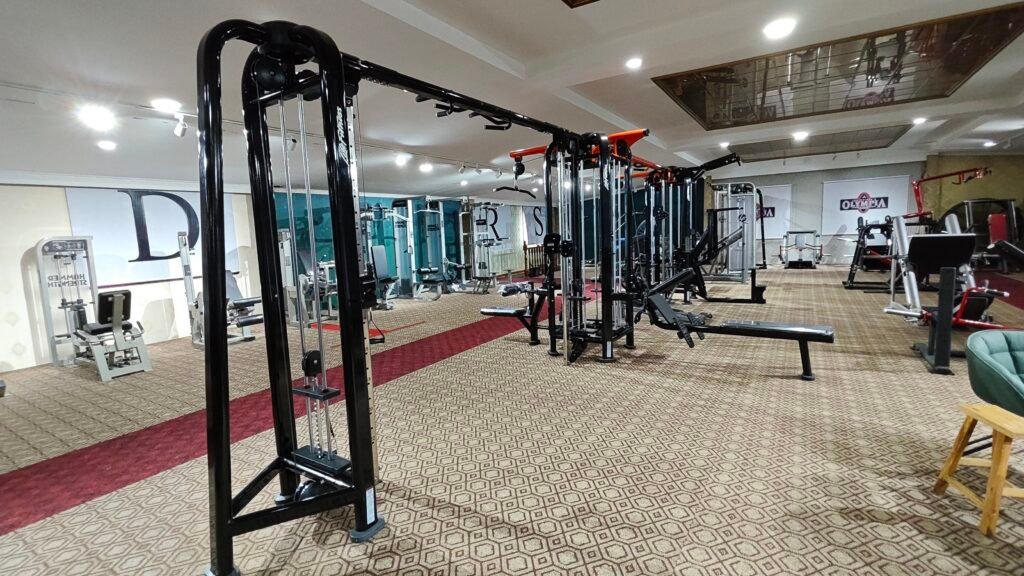
What Brand Do Most Gyms Use?
The commercial fitness equipment market features several major brands with established reputations and significant market presence. While no single brand dominates all facility types, certain manufacturers have become preferred choices across different market segments.
Life Fitness stands as the most ubiquitous commercial brand, particularly in cardio equipment. Their treadmills, ellipticals, stationary bikes, and stair climbers are found in hotels, corporate wellness centers, traditional health clubs, and university facilities worldwide. The brand’s reputation for reliability, extensive service network, and consistent performance makes it a default choice for many facility operators.
Precor commands significant market share in premium facilities, known particularly for their smooth elliptical motion and ergonomic design. Many upscale GYM CLUB locations and luxury Fitness Studio environments prefer Precor for its aesthetic appeal, member comfort, and perceived quality.
Technogym has established itself as the premier choice for high-end facilities, boutique studios, and luxury hotel spas. Their Italian design, innovative technology integration, and comprehensive wellness ecosystem appeal to facilities positioning themselves as premium destinations.
Hammer Strength (owned by Life Fitness) dominates in plate-loaded strength training equipment. Serious strength training facilities, athletic performance centers, and collegiate training programs typically incorporate Hammer Strength pieces for their durable construction, biomechanical design, and professional reputation.
Matrix Fitness has grown rapidly, offering competitive pricing and modern designs that appeal to mid-market facilities, franchise operations, and growing gym chains. Their commercial-grade equipment provides excellent value for cost-conscious facility operators.
Cybex (now part of Life Fitness) maintains a strong presence in rehabilitation, clinical settings, and premium commercial facilities. Their research-backed designs and safety features make them popular choices for facilities serving diverse populations.
Star Trac enjoys popularity in value-conscious commercial settings and franchise operations where equipment cost is a primary consideration.
Nautilus remains relevant in certain market segments, particularly for selectorized strength equipment in mid-market facilities.
However, industry surveys and facility observations reveal that most gyms use multiple brands strategically. A typical commercial GYM CLUB might feature Life Fitness cardio equipment, Hammer Strength plate-loaded machines, Precor selectorized strength equipment, and specialized brands for functional training, group exercise, and accessory equipment. This mixed-brand approach optimizes member experience by leveraging each brand’s specific strengths.
For many gym owners, the most important “brand” consideration is local distributor support and service reliability. Even the highest-quality fitness equipment becomes problematic without accessible service, parts availability, and technical expertise. Established GYM Manufacturer companies like Gettinglong distinguish themselves through comprehensive global support networks that ensure equipment remains operational regardless of location.
Future Trends in Fitness Equipment
The fitness equipment industry continues evolving with technology, consumer preferences, and health trends shaping equipment development and facility planning:
Digital integration and connectivity – Smart equipment with integrated screens, performance tracking, app connectivity, and virtual training capabilities has become standard in new facilities.
Sustainability and environmental responsibility – Environmentally conscious facilities increasingly seek equipment manufactured with sustainable materials, energy-efficient operation, and recyclable components.
Functional training expansion – The continued growth of functional fitness has driven demand for specialized equipment including cable machines, rigs, suspension trainers, and accessory items.
Compact and versatile designs – Urban facilities and space-constrained environments require equipment that maximizes functionality within limited footprints.
Inclusive and adaptive equipment – Facilities increasingly prioritize equipment designed for users of all abilities, body sizes, and fitness levels.
Data-driven member engagement – Equipment that captures and transmits usage data helps facilities optimize equipment selection, maintenance scheduling, and member retention strategies.
Conclusion
The fitness equipment industry continues evolving with technology, consumer preferences, and health trends shaping equipment development and facility planning:
Digital integration and connectivity – Smart equipment with integrated screens, performance tracking, app connectivity, and virtual training capabilities has become standard in new facilities.
Sustainability and environmental responsibility – Environmentally conscious facilities increasingly seek equipment manufactured with sustainable materials, energy-efficient operation, and recyclable components.
Functional training expansion – The continued growth of functional fitness has driven demand for specialized equipment including cable machines, rigs, suspension trainers, and accessory items.
Compact and versatile designs – Urban facilities and space-constrained environments require equipment that maximizes functionality within limited footprints.
Inclusive and adaptive equipment – Facilities increasingly prioritize equipment designed for users of all abilities, body sizes, and fitness levels.
Data-driven member engagement – Equipment that captures and transmits usage data helps facilities optimize equipment selection, maintenance scheduling, and member retention strategies.


